

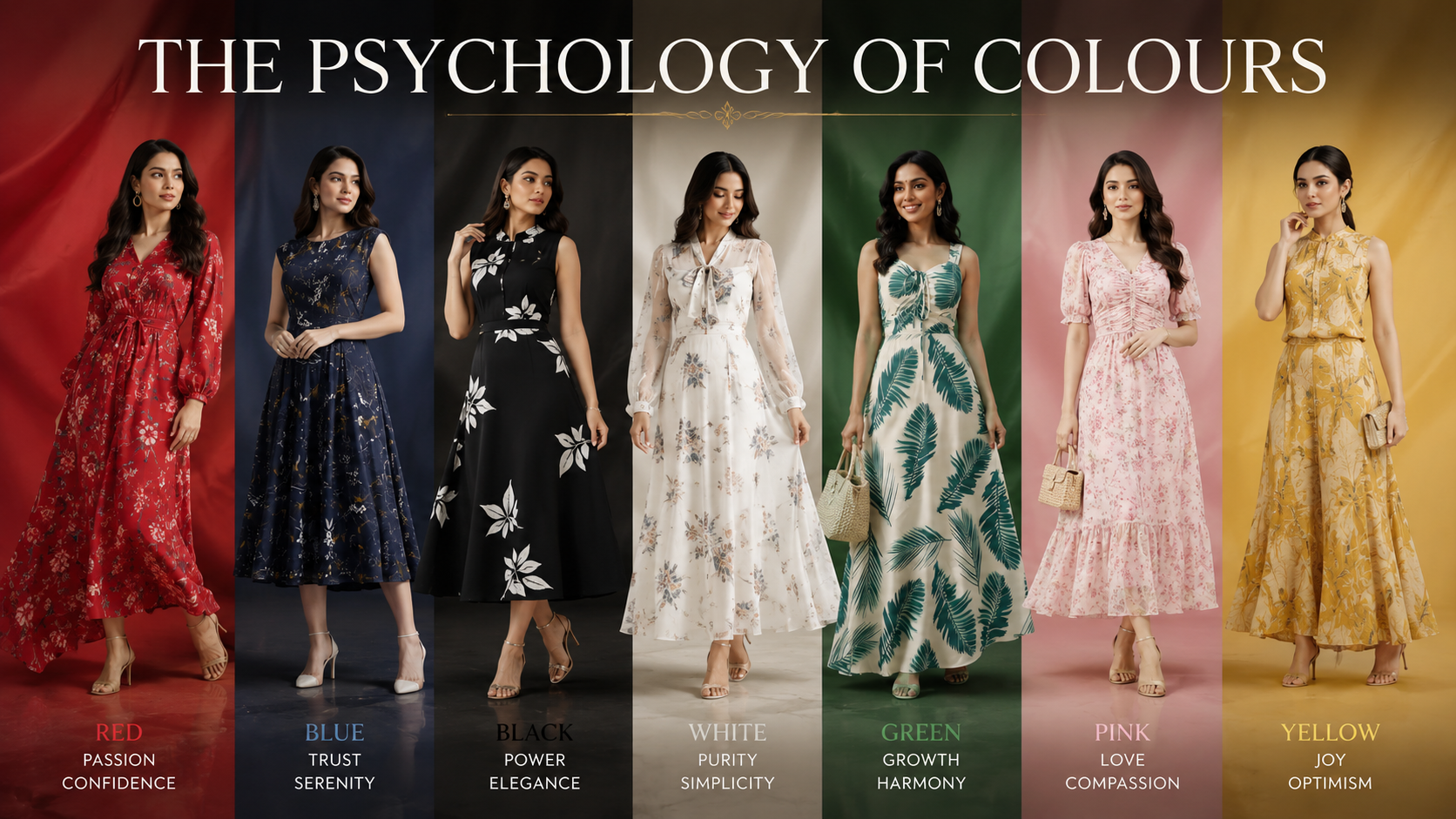
Fashion is often viewed as a way to express personal style, but clothing communicates much more than appearance alone. One of the most powerful elements in any outfit is color. Long before someone notices the details of a garment, they subconsciously react to its color. This is why understanding the psychology of colors in women's fashion can help you make more intentional style choices and create a stronger personal image.
Colors influence emotions, perceptions, moods, and even behavior. They can make an outfit feel sophisticated, energetic, approachable, confident, romantic, or powerful. Whether you're selecting a saree for a wedding, a dress for an important event, or an everyday outfit for work, the colors you wear can shape how others perceive you and how you feel about yourself.
In modern fashion, color is not simply a design element—it's a form of non-verbal communication. By understanding color psychology, women can build wardrobes that not only look beautiful but also support confidence, self-expression, and personal goals.
Why Color Matters in Fashion
Color is often the first thing people notice about clothing.
Studies in psychology and marketing consistently show that color has a significant impact on first impressions. Before anyone evaluates fabric quality, design details, or styling choices, they subconsciously respond to color.
In fashion, color can:
- Influence mood
- Enhance confidence
- Communicate personality
- Affect social perception
- Create visual balance
- Highlight specific features
This makes color selection one of the most important decisions when building a wardrobe.
The Connection Between Color and Emotion
Different colors naturally evoke different emotional responses.
While personal preferences and cultural influences play a role, certain color associations are widely recognized across fashion and design industries.
For example:
- Red often symbolizes energy and confidence.
- Blue is associated with trust and calmness.
- Black communicates sophistication and authority.
- White represents simplicity and elegance.
Understanding these associations allows women to choose colors that align with their intentions and desired image.
Red: The Color of Confidence and Power
Few colors make a statement as strong as red.
Red naturally attracts attention and is often associated with:
- Confidence
- Passion
- Energy
- Strength
- Leadership
When to Wear Red
Red works particularly well for:
- Celebrations
- Festive occasions
- Special events
- Important presentations
- Date nights
Fashion Impact
A red dress, saree, or blouse can instantly become the focal point of an outfit.
Because red is naturally bold, it often requires fewer accessories to create a memorable look.
Blue: The Color of Trust and Calm
Blue is one of the most universally loved colors in fashion.
It conveys:
- Reliability
- Stability
- Intelligence
- Calmness
- Professionalism
Why Women Love Blue
Blue is versatile and flattering across a wide range of skin tones.
Best Occasions for Blue
- Office wear
- Business meetings
- Professional events
- Casual outings
- Travel
Navy blue, in particular, offers many of the sophistication benefits of black while appearing slightly softer and more approachable.
Black: The Symbol of Elegance and Authority
Black remains one of the most powerful colors in fashion.
Its popularity comes from its versatility and timeless appeal.
Psychological Associations
Black often communicates:
- Sophistication
- Confidence
- Luxury
- Authority
- Mystery
Why Black Never Goes Out of Style
Black works for virtually every occasion and pairs effortlessly with other colors.
From little black dresses to elegant sarees and tailored blazers, black remains a cornerstone of stylish wardrobes.
White: The Color of Simplicity and Freshness
White represents purity, clarity, and elegance.
It creates an impression of:
- Cleanliness
- Simplicity
- Sophistication
- Freshness
- Modernity
Why White Is a Fashion Essential
White reflects light beautifully and creates a crisp, polished appearance.
Popular white fashion pieces include:
- Cotton dresses
- Linen shirts
- Sarees
- Tailored trousers
White also serves as an excellent foundation for colorful accessories.
Pink: Femininity with Modern Strength
Pink has evolved significantly in modern fashion.
While traditionally associated with softness and romance, today's fashion landscape embraces pink as a color of confidence and individuality.
Psychological Effects
Pink often conveys:
- Warmth
- Compassion
- Optimism
- Femininity
- Creativity
Trending Shades
- Blush pink
- Dusty rose
- Fuchsia
- Hot pink
Modern women increasingly use pink to make bold and sophisticated style statements.
Green: Balance, Growth, and Nature
Green is strongly connected to nature and renewal.
It symbolizes:
- Harmony
- Growth
- Freshness
- Prosperity
- Wellness
Why Green Is Trending
As sustainability becomes more important, green has gained popularity in fashion because of its association with environmental consciousness.
Popular Shades
- Emerald green
- Olive green
- Sage green
- Forest green
These shades provide both elegance and versatility.
Yellow: Optimism and Energy
Yellow is often associated with positivity and joy.
Emotional Impact
Yellow can evoke:
- Happiness
- Creativity
- Confidence
- Enthusiasm
- Warmth
Styling Tips
Because yellow naturally attracts attention, it works best as either:
- A statement color
- An accent shade
Mustard and golden yellows are particularly popular in contemporary fashion.
Purple: Luxury and Creativity
Purple has long been associated with royalty and sophistication.
What Purple Communicates
- Luxury
- Creativity
- Wisdom
- Individuality
Fashion Applications
Purple sarees, evening dresses, and festive outfits often create a rich and memorable appearance.
Deep shades such as plum and royal purple are especially elegant.
Orange: Confidence and Adventure
Orange combines the energy of red with the optimism of yellow.
It often represents:
- Enthusiasm
- Creativity
- Adventure
- Confidence
Best Uses in Fashion
Orange works particularly well in:
- Resort wear
- Vacation outfits
- Summer fashion
- Statement accessories
When styled thoughtfully, orange creates vibrant and contemporary looks.
Beige and Neutral Tones: Quiet Luxury
Neutral colors have become increasingly important in modern fashion.
Psychological Associations
Neutrals communicate:
- Sophistication
- Stability
- Elegance
- Refinement
Popular Neutral Shades
- Beige
- Cream
- Taupe
- Camel
- Sand
These colors are central to the quiet luxury movement because they emphasize quality and timelessness.
How Colors Influence Confidence
One of the most fascinating aspects of color psychology is its effect on self-perception.
Research suggests that the colors we wear can influence how we feel about ourselves.
Confidence Colors
Many women feel empowered when wearing:
- Red
- Black
- Emerald green
- Royal blue
Calming Colors
Colors that often promote relaxation include:
- Soft blue
- Sage green
- Lavender
Choosing colors intentionally can positively influence mood and confidence levels throughout the day.
Color Psychology in Ethnic Fashion
Color symbolism plays an especially important role in traditional and ethnic fashion.
Red Sarees
Often associated with celebration and joy.
Yellow Ethnic Wear
Represents positivity and auspiciousness.
Green Outfits
Commonly associated with prosperity and harmony.
White and Ivory
Frequently chosen for elegant and sophisticated styling.
Understanding cultural color associations can enhance fashion choices for special occasions.
Building a Color-Balanced Wardrobe
A versatile wardrobe includes a thoughtful mix of colors.
Core Neutrals
Build your foundation with:
- Black
- White
- Beige
- Navy
Statement Colors
Add personality through:
- Red
- Green
- Purple
- Pink
Seasonal Accents
Incorporate trending shades while maintaining versatility.
This balance allows you to express yourself while maximizing outfit combinations.
Common Color Mistakes to Avoid
Wearing Colors Without Purpose
Choose colors that align with your mood, occasion, and goals.
Ignoring Skin Tone
Certain shades naturally complement specific complexions better than others.
Overusing Trend Colors
Fashion trends change quickly. Timeless colors provide greater longevity.
Avoiding Color Altogether
While neutrals are versatile, strategic use of color adds energy and personality to a wardrobe.
The Future of Color in Fashion
Fashion is becoming increasingly personal and expressive.
As women prioritize individuality over rigid fashion rules, color choices are becoming more intentional.
Rather than following seasonal color trends blindly, modern consumers are selecting shades that reflect:
- Personality
- Lifestyle
- Values
- Emotional preferences
This shift makes color psychology more relevant than ever.
Conclusion
The psychology of colors in women's fashion extends far beyond aesthetics. Colors influence emotions, shape first impressions, communicate personality, and impact confidence. By understanding what different colors represent, women can make more intentional fashion choices that align with their goals and self-expression.
Whether you're wearing the confidence of red, the sophistication of black, the calmness of blue, or the elegance of neutral tones, every color tells a story. Fashion becomes more powerful when color is used thoughtfully, transforming clothing from simple garments into meaningful expressions of identity.
In the end, the best color is not necessarily the trendiest one—it's the one that makes you feel confident, comfortable, and authentically yourself.
Frequently Asked Questions
Why is color psychology important in fashion?
Color psychology helps explain how different colors influence emotions, confidence, and how others perceive us.
Which color represents confidence in fashion?
Red, black, royal blue, and emerald green are often associated with confidence and strength.
What colors are best for professional settings?
Navy blue, black, grey, and white are popular choices because they convey professionalism and reliability.
Are neutral colors still fashionable?
Yes. Neutral tones remain highly fashionable due to their versatility, sophistication, and connection to quiet luxury trends.
How can I use color psychology in my wardrobe?
Choose colors that align with your mood, personality, occasion, and the image you want to project.


