

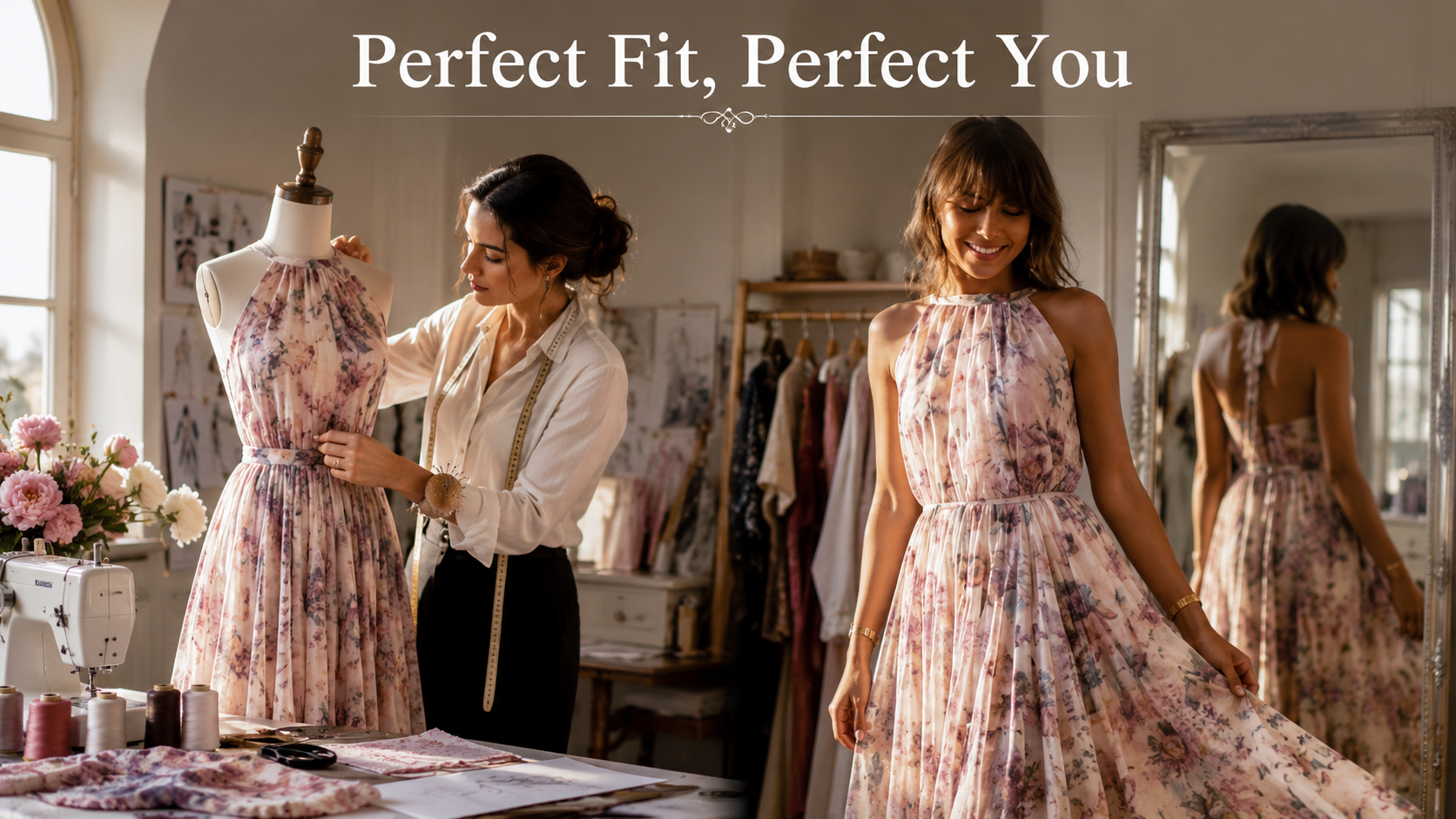
Have you ever noticed how some people always look effortlessly polished, regardless of what they're wearing? The secret often isn't the brand, price tag, or latest fashion trend—it's the fit. A well-fitted garment can completely transform your appearance, making even a simple outfit look elegant, sophisticated, and expensive.
Fashion experts agree that proper tailoring is one of the most important factors in achieving a refined and confident look. Whether it's a flowing maxi dress, a traditional saree blouse, a formal gown, or a casual kurti, the way a garment fits your body significantly influences both comfort and style.
While many shoppers focus on colors, prints, and fabrics, tailoring is often overlooked. Yet, it is the element that determines how beautifully a garment complements your body shape, enhances your silhouette, and allows you to move comfortably.
In this comprehensive guide, we'll uncover the secrets behind perfect dress fitting and tailoring, explain why fit matters so much, and share practical tips for achieving a flawless look every time.
Why Dress Fitting Matters More Than Fashion Trends
Fashion trends come and go, but a perfect fit never goes out of style.
A well-fitted garment can:
- Enhance body proportions
- Improve comfort
- Boost confidence
- Create a polished appearance
- Make clothing look more expensive
On the other hand, even premium fabrics and designer garments can appear unflattering when they don't fit properly.
Professional stylists often say that fit is the foundation of great style, and for good reason.
The Difference Between Ready-Made and Tailored Clothing
Ready-Made Clothing
Most garments available in stores are produced using standard sizing charts.
While convenient, these sizes are designed to fit a broad range of body shapes and may not account for individual proportions.
Common issues include:
- Loose waistlines
- Tight shoulders
- Incorrect sleeve lengths
- Poor bust fitting
- Uneven hemlines
Tailored Clothing
Tailored garments are adjusted to suit your specific measurements and body shape.
Benefits include:
- Better comfort
- Enhanced silhouette
- Improved movement
- Professional appearance
Tailoring transforms clothing from a generic fit into a personalized garment.
Understanding the Basics of Perfect Fit
Shoulder Fit
The shoulders are one of the most critical areas of any garment.
A proper shoulder fit should:
- Align with your natural shoulder line
- Allow comfortable movement
- Avoid pulling or bunching
Poor shoulder fit can affect the overall appearance of an outfit.
Bust and Chest Fit
The bust area should provide enough room for comfort without creating excess fabric.
Signs of a good fit include:
- Smooth fabric lay
- No pulling at seams
- Comfortable movement
This is especially important for dresses, blouses, and ethnic wear.
Waist Definition
A properly fitted waist creates structure and enhances body proportions.
Whether the garment is fitted or flowing, the waistline should complement your natural shape rather than conceal it completely.
Hip and Skirt Fit
The hip area should allow freedom of movement while maintaining a clean silhouette.
Too much tightness can cause pulling, while excess fabric may create unnecessary bulk.
Hem Length
Appropriate hem length contributes significantly to overall balance.
The ideal length depends on:
- Garment style
- Footwear choice
- Occasion
- Personal preference
A correctly adjusted hem instantly improves the appearance of a dress.
The Role of Accurate Measurements
Perfect tailoring begins with accurate measurements.
Key measurements include:
- Bust
- Waist
- Hips
- Shoulder width
- Sleeve length
- Dress length
- Arm circumference
Professional tailors often take multiple measurements to ensure precision.
Why Measurements Change
Body measurements can fluctuate over time due to:
- Weight changes
- Fitness routines
- Lifestyle factors
- Aging
For this reason, it's important to update measurements periodically.
How Fabric Influences Dress Fitting
Not all fabrics behave the same way.
The material used in a garment directly affects how it fits and drapes.
Structured Fabrics
Examples include:
- Cotton
- Linen blends
- Brocade
- Denim
These fabrics hold their shape well and provide a more defined silhouette.
Flowing Fabrics
Examples include:
- Chiffon
- Georgette
- Rayon
- Silk
These materials create softer lines and elegant movement.
Stretch Fabrics
Stretch fabrics offer:
- Greater flexibility
- Enhanced comfort
- Easier fitting
However, they still require proper tailoring to achieve a flattering look.
Common Dress Fitting Mistakes
Choosing the Wrong Size
Many people purchase clothing based solely on size labels rather than actual fit.
Sizing can vary significantly between brands.
Always evaluate:
- Comfort
- Proportions
- Silhouette
rather than relying on the number on the tag.
Ignoring Alterations
Small alterations can dramatically improve a garment.
Common adjustments include:
- Shortening hems
- Taking in the waist
- Adjusting sleeves
- Refining shoulder fit
Prioritizing Trends Over Fit
A trendy outfit won't look its best if it doesn't fit properly.
Fit should always take priority over fashion trends.
Tailoring Secrets Used by Fashion Professionals
Strategic Waist Adjustments
One of the most effective tailoring techniques involves creating subtle waist definition.
This simple alteration can:
- Improve proportions
- Create shape
- Enhance elegance
Proper Sleeve Length
Sleeves that are too long or too short can disrupt an outfit's balance.
Tailors carefully adjust sleeve lengths to create a polished appearance.
Balanced Hemlines
Professional tailoring ensures hemlines remain even and proportionate to the wearer's height.
Garment Shaping
Darts, seams, and strategic alterations help garments follow the body's natural contours.
These details often distinguish premium tailoring from standard clothing.
Perfect Fitting for Different Dress Styles
Maxi Dresses
For maxi dresses:
- Ensure proper waist placement
- Maintain appropriate length
- Avoid excessive volume
A-Line Dresses
The fit should remain smooth through the bodice while allowing movement through the skirt.
Bodycon Dresses
Balance is essential.
The garment should follow body contours without feeling restrictive.
Ethnic Wear
For saree blouses, kurtis, and traditional outfits:
- Shoulder fit is crucial
- Sleeve adjustments matter
- Neckline proportions should complement the overall design
How Perfect Fit Improves Confidence
The relationship between clothing and confidence is well documented.
A well-fitted outfit often leads to:
- Improved posture
- Greater comfort
- Positive self-image
- Increased confidence
When clothing fits properly, individuals spend less time adjusting garments and more time focusing on their activities.
Signs Your Dress Needs Tailoring
Consider alterations if you notice:
- Gaping around the bust
- Loose waistline
- Uneven hem
- Restricted movement
- Excess fabric
- Sleeve issues
Even minor adjustments can dramatically improve the final result.
Investing in Tailoring: Is It Worth It?
Many people hesitate to spend money on alterations, but tailoring often provides excellent value.
Benefits include:
- Better appearance
- Extended garment life
- Improved comfort
- More versatile wardrobe
Instead of constantly purchasing new clothing, tailoring allows you to maximize the potential of pieces you already own.
Frequently Asked Questions
Why is tailoring important?
Tailoring improves garment fit, comfort, appearance, and overall style by customizing clothing to your body shape.
Can tailoring make inexpensive clothing look expensive?
Yes. Proper fit is one of the most important factors influencing how luxurious clothing appears.
Which part of a dress is most important to fit correctly?
The shoulders are often considered the most critical area because they influence the entire garment's structure.
How often should measurements be updated?
Measurements should be reviewed whenever significant body changes occur or at least once a year.
Conclusion
The secret behind perfect dress fitting and tailoring lies in understanding that great style begins with proper fit. Regardless of the garment's price or designer label, clothing that complements your body shape will always look more polished, elegant, and sophisticated.
From accurate measurements and fabric selection to strategic alterations and professional tailoring techniques, every detail contributes to creating a garment that feels as good as it looks. By prioritizing fit and investing in quality tailoring, you can transform ordinary clothing into pieces that enhance confidence, comfort, and personal style.
In fashion, trends may come and go, but a perfectly fitted dress remains timeless.


